
Discovering Arts in Barcelona
07.01.2026
During the last week of November, I took part in an Erasmus+ course in Barcelona. The course focused on searching for and discovering the architecture, art, and culture of this fascinating and colourful city.
Our course leader took us on excursions in the city – perhaps not to the most famous attractions, but to other places such as Casa Vicens (Gaudi), Museu Nacional d'Art de Catalunya, Joan Miro Foundation and Palau de la Música Catalana. He also showed us the Gracia district, which is Barcelona's own hippie neighbourhood and very unique.
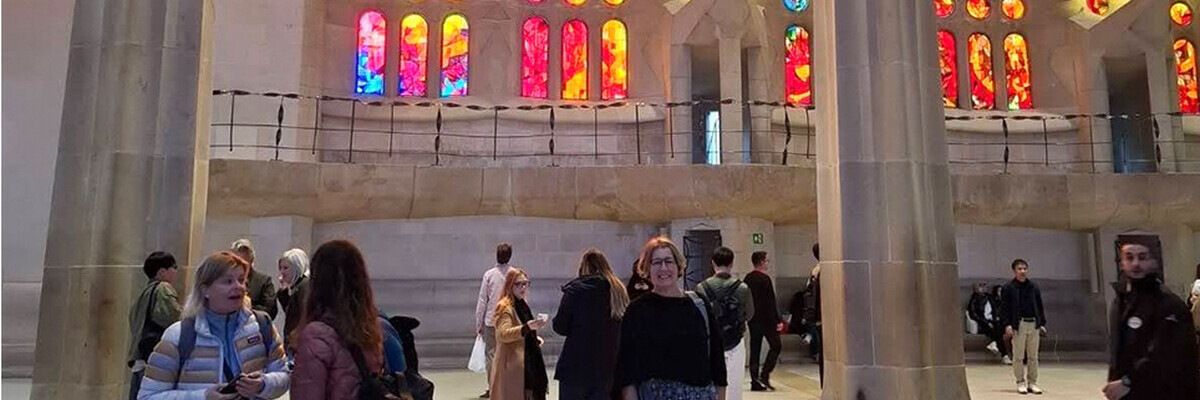
The course days were short, and we had a lot of free time. Together with a new friend, we visited several other places in Barcelona: Sagrada Familia, Parc Guell, and Casa Battló, all of which are masterpieces by the architect Antoni Gaudi. These buildings are really worth seeing because of their beauty and ingenuity.
Another noteworthy building that is not by Gaudí but designed by Domènech i Montaner is the large Hospital de la Santa Creu in Sant Pau. The hospital was the largest of all construction projects during the Catalan modernist era. Domènech chose to design the hospital as a garden city with detached pavilions in line with the most progressive ideas of healthcare at that time. A lot of energy was put into creating a pleasant environment for patients in the form of artistic decorations, and several of Barcelona's leading sculptors and artists participated in the construction of the hospital. Domènech strongly believed in the healing power of art. Visiting the building was truly a beautiful experience.
There were 14 participants in the course, ten from Italy and four from Finland. The cultural differences became very clear. The Nordic mindset of following rules, listening to each other with respect, etc, clashed somewhat with the southern European more laissez-faire attitude.
Many people attend Erasmus+ courses together with one or two colleagues. They have each other's company and perhaps don't have the same interest or need of making new friends. I went on my own, which meant that I got ot know new people. I want to invite some of them to Åland, for example, to hold an art course or take part in teaching at our non-formal adult education institute on the Åland Islands.
The biggest gain from the course was the new acquaintances and the inspiration regarding color and form for my teaching and my own artistry.
The course leader behaved more like a skilled tourist guide than a good teacher. I would have preferred more engaging group discussions on various educational themes and more in-depth experiences during the various museum visits. The teacher could have given us small tasks to complete during a visit to be presented and discussed afterwards in the group for deeper understanding.
However, the trip was rewarding—it gave me energy and many aesthetic experiences that I will cherish for a long time. Unfortunately, I had a slight feeling that the organizer, the European Academy of Creativity within the Europass Teacher Academy, is more of a commercial organisation, as also described by our teacher. I had expected more value for the relatively high course fee.
Lin Simons
Art teacher
Medborgarinstitutet på Åland


